Mobile Microscopy in Combating Malaria
AI and mobile microscopy could transform malaria detection by bridging traditional laboratory diagnosis with faster, smarter, and more accessible technology.
Mary Anieama
Author
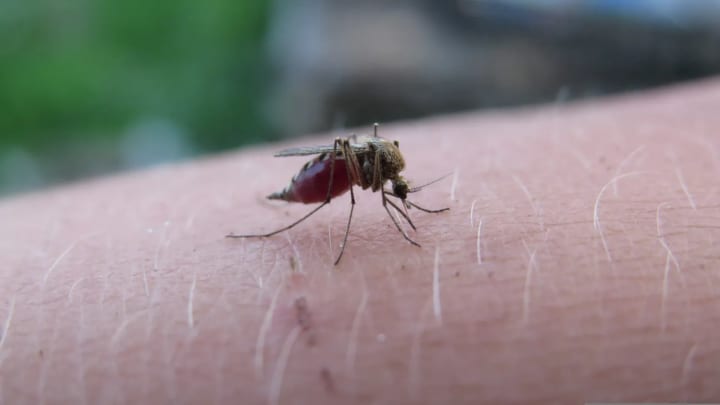
Why should the opportunity to live be strongly dependent on where you live? A child geographically suited in a rural establishment has few chances of dealing with the burden of malaria. In high-transmission African regions, a child often dies from malaria every 1–2 minute. Malaria remains a leading cause of death in West Africa, accounting for over 120 million cases and more than 300,000 deaths annually. Nigeria alone contributes nearly 27% of global cases and 31% of malaria deaths worldwide (WHO, 2024).
Characteristics of Plasmodium Species
Malaria is caused by four different protozoa in the plasmodium genus: either Plasmodium vivax, P. ovale, P. malaria, or P. falciparum.
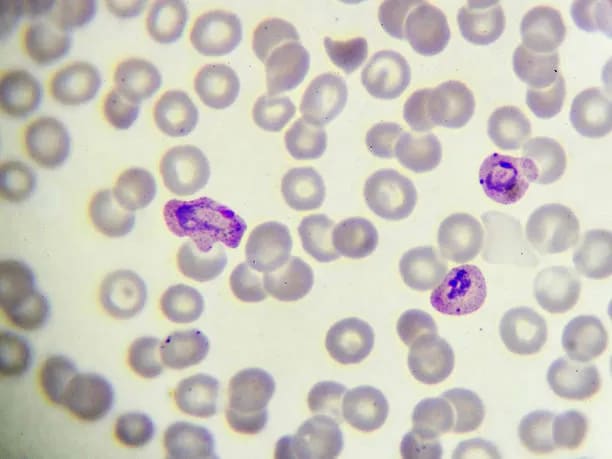
Comparing these species' effect on the RBCs, P. vivax infections leave infected RBCs to appear larger than uninfected cells. Trophozoite may appear as thick, large ameboid rings, about one half the diameter of the RBC. Schuffner’s dots are seen. P. vivax schizonts contain 12 to 24 merozoites, almost fill the entire cell, and also contain Schuffner’s dots which can be arranged loosely or in a rosette pattern. (CDC, 2020).
Infected RBCs of Plasmodium falciparum are usually normal-sized, not enlarged. Multiple infections per RBC are common. Trophozoites often appear as thin rings, most times with double chromatin dots. Schüffner’s dots are usually absent and replaced with Maurer’s clefts (larger, irregular dots). Schizonts are usually not seen in peripheral blood. When present, they contain 8–24 merozoites. (Tangpukdee et al., 2009).
Plasmodium ovale have enlarged and oval-shaped RBCs which may appear fimbriated or ragged at the edges. The trophozoites of P. ovale are similar to P. vivax, appearing as amoeboid rings, but less prominent. Schüffner's dots which are usually present are also called James’ dots. Schizonts contain 6–14 merozoites which fill about 3/4 of the RBC, and may be arranged in a loose cluster. (CDC, 2020).
Plasmodium malariae specifically has its infected RBCs to be normal-sized or slightly smaller. The trophozoites are compact rings which often form bands or banded shaped trophozoites. The Schüffner’s dots are absent. Schizonts typically contain 6–12 merozoites, often arranged in a rosette or daisy-head pattern. (Collins & Jeffery, 2005).
Diagnostic Limitations
Recently, primary health centers in rural and underdeveloped regions have been equipped with skills for manual microscopy by global health initiatives like WHO, USAIDs. This had also improved the number of trained personnels, especially in countries with high malaria burden like Nigeria.
How does Mobile microscopy seek to improve malaria detection?
Mobile Microscopy & AI-Based Tools has proven to be way forward in alternatively dealing with the limitations of microscopy.
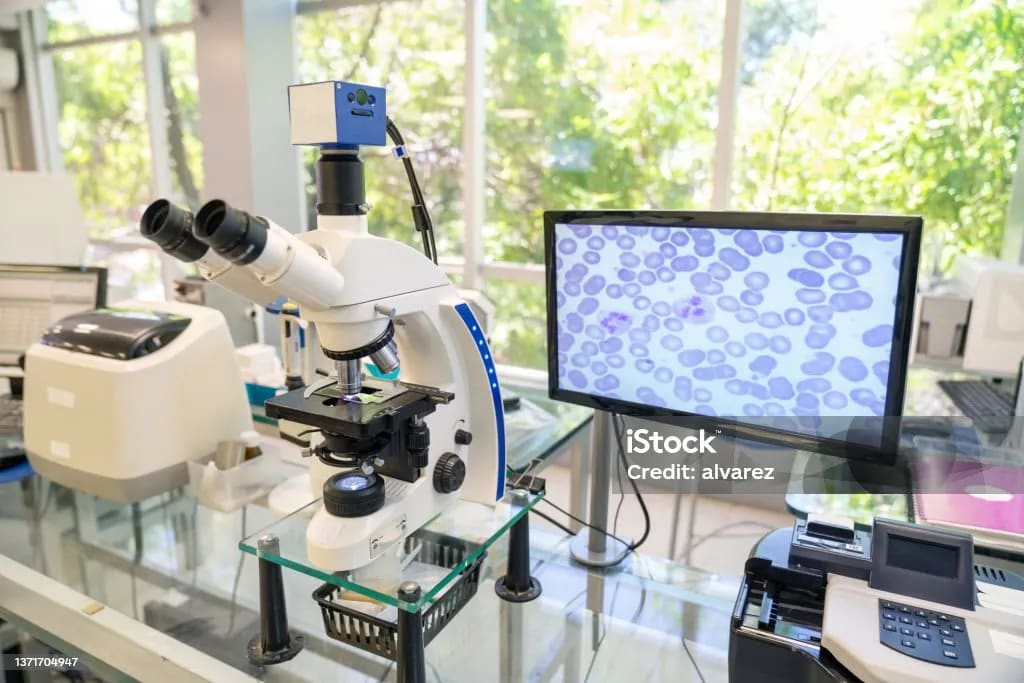
Using portable devices like smartphone cameras and AI to analyze blood smears are being piloted to encourage malaria detection more effectively as against the traditional clinical methods. A recent study by Casey W. Pirnstill and Gerard L. Coté titled “Malaria Diagnosis Using a Mobile Phone Polarized Microscope" which was published in Scientific Reports in 2015 demonstrated a success attempt to detect malaria in a stained blood smear.
The BMLSIA Initiative and its Multidisciplinary role in diagnostic technology
AI and other technological advancements may pave the way for an era of precision and personalized medicine, adding significant value to the role of the laboratory in delivering diagnosis and management of malaria.
Biomedical Science: Validate the scientific accuracy of AI predictions and help set clinical thresholds for diagnosis.
Medical Writing: Ensure that scientific claims are accurately and ethically presented.
AI/ML Engineering: Develop the machine learning models that detect malaria parasites in images captured via phone cameras.
Development: Build the mobile application or software platform that users interact with.
Product Management: Ensure the product meets the needs of end-users, funders, and health institutions.
Conclusion
Multidisciplinary roles can help bridge the gap between traditional clinical diagnosis and precision medicine provided by technological advancements in the form of mobile microscopy and artificial intelligence.